News & Updates
Widening Part Hair Loss: When Hair Part Widening Signals Thinning
4 February 2026

Table of Contents:
- Widening Part Hair Loss: Is Hair Part Widening a Sign of Thinning?
- What Is Hair Part Widening and Why People Notice It First
- Hair Part Widening vs Normal Part: How to Tell the Difference
- What a Widening Hair Part Looks Like in Early Hair Loss
- Common Causes of Widening Part Hair Loss
- Signs Your Hair Part Widening Is Progressive Hair Loss
- How Widening Part Hair Loss Is Diagnosed
- Can Widening Part Hair Loss Be Reversed or Stopped?
- Treatment Options for Hair Part Widening and Hair Loss
- Key Takeaway: What to Do If Your Hair Part Is Getting Wider
Noticing that your hair part looks wider than it used to can be unsettling. For many people, this small change becomes the first visible sign that something is happening with their hair density. A widening part does not always mean hair loss, but in many cases, it is one of the earliest clues that thinning may be developing.
Understanding what hair part widening means, how it differs from a normal part, and when it points toward hair loss can help you decide what to do next without panic or delay.
Widening Part Hair Loss: Is Hair Part Widening a Sign of Thinning?
Yes, a widening hair part can be a sign of hair loss, especially in the early stages of female pattern hair loss. As hair density decreases along the top of the scalp, the part line gradually becomes more visible. This change often happens slowly, which is why it is easy to miss at first.
At the same time, not every widening part indicates permanent hair loss. Temporary shedding, hormonal shifts, or changes in hair styling can also make the part appear wider. The key is whether the change is stable or progressive.
What Is Hair Part Widening and Why People Notice It First
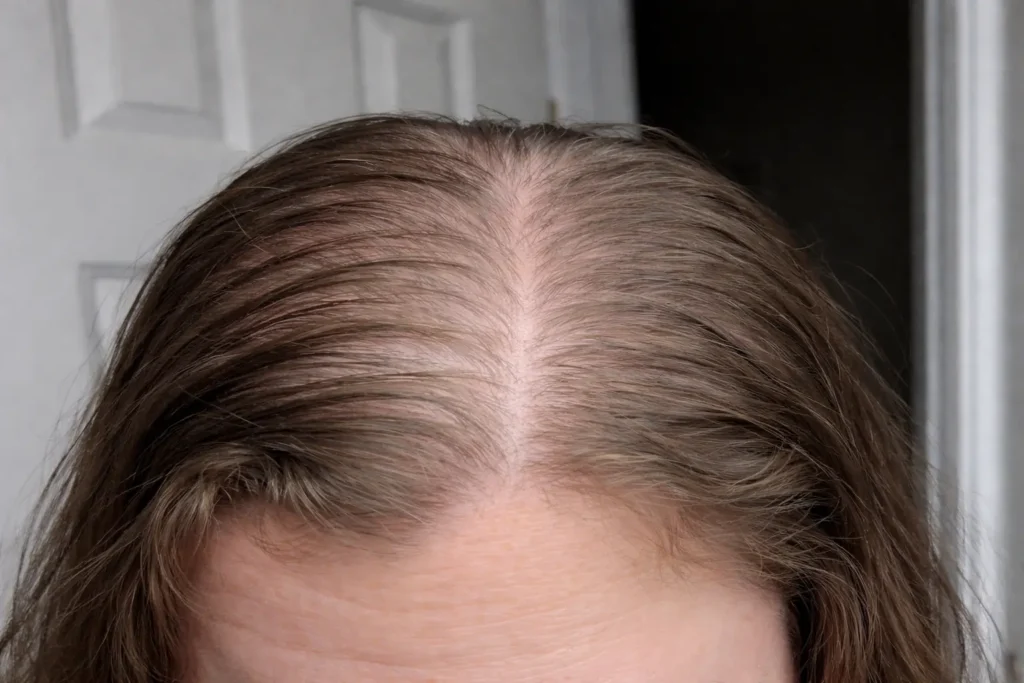
Hair part widening refers to an increase in the visible scalp along the natural or styled part line. Instead of a narrow, clean line, the part begins to look broader or uneven.
People often notice this first because:
- The top of the scalp is more exposed to light
- The part is a consistent reference point seen daily
- Changes show up clearly in mirrors and photographs
Unlike overall thinning, which can be hard to judge, part widening creates a clear visual comparison over time.
Hair Part Widening vs Normal Part: How to Tell the Difference
A normal hair part remains relatively consistent in width over months and years. It may look slightly wider under bright lighting or when hair is wet, but it does not continue to expand.
A widening part linked to hair loss usually shows these features:
- Gradual increase in scalp visibility
- Less hair volume along the part
- Difficulty styling hair to cover the line
- Greater contrast between hair and scalp
If the part keeps widening despite changes in lighting, products, or styling, it may signal reduced hair density.
What a Widening Hair Part Looks Like in Early Hair Loss
In early hair loss, the widening part often looks subtle rather than dramatic. Common descriptions include:
- A center part that looks broader at the crown
- A faint triangular shape forming along the mid scalp
- Scalp that becomes visible under overhead light
- A part that looks wider in photos than in the mirror
These changes tend to progress slowly, which is why many people only recognize them in hindsight.
Common Causes of Widening Part Hair Loss
Female Pattern Hair Loss and Widening Part
Female pattern hair loss is one of the most common causes of widening part hair loss. It typically affects the top and crown of the scalp while preserving the frontal hairline. As individual hair follicles shrink over time, overall density decreases, making the part appear wider. This pattern often runs in families and progresses gradually.
Temporary Hair Part Widening From Shedding
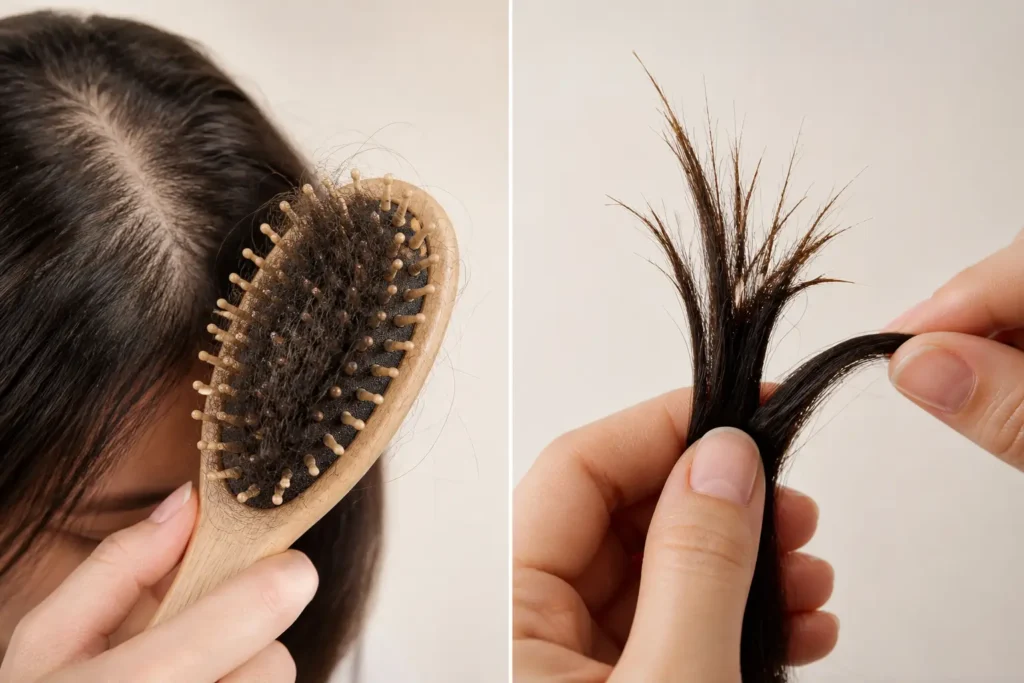
Telogen effluvium causes widespread shedding, and in some cases people may notice hair falling out in clumps after triggers such as illness, stress, surgery, or hormonal changes. When many hairs shed at once, especially during sudden hair fall, the part can look wider due to reduced density. In most cases, this type of hair part widening improves as hair regrows over several months.
Hair Styling, Traction, and Repeated Parting
Consistently parting hair in the same place or wearing tight hairstyles can place stress on follicles along the part line. Over time, this can lead to thinning that mimics early hair loss. Changing part placement and reducing tension can help prevent further damage.
Scalp and Hormonal Conditions That Affect the Hair Part
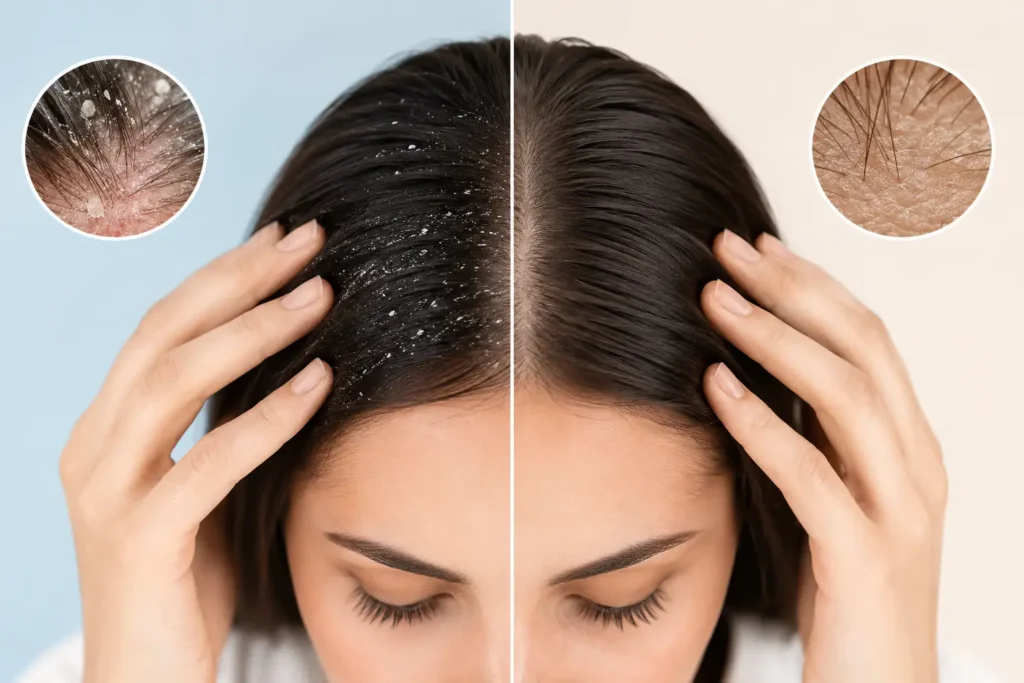
Inflammatory scalp conditions, chronic dandruff, and hormonal imbalances can interfere with healthy hair growth. If the scalp is irritated or inflamed, hair density along the part may gradually decline.
Signs Your Hair Part Widening Is Progressive Hair Loss
Certain signs suggest that hair part widening may be part of ongoing hair loss rather than a temporary change, especially for those experiencing hair loss in their twenties.
- The part continues to widen over several months
- Hair volume feels reduced along the top of the scalp
- Styling no longer conceals the part effectively
- Thinning is more noticeable in bright or overhead light
- There is a family history of pattern hair loss
Tracking changes with consistent photos can help determine whether the condition is progressing.
How Widening Part Hair Loss Is Diagnosed
- What Professionals Look for in a Widening Part: During evaluation, clinicians assess hair density, follicle size variation, and the distribution of thinning. A widening part with noticeable variation in hair thickness often points toward pattern hair loss.
- Scalp Examination and Tracheoscopy: Tracheoscopy allows magnified examination of the scalp and hair follicles. This helps identify early miniaturization and distinguish between shedding and pattern related thinning.
- When Blood Tests Are Considered: Blood tests may be recommended to rule out contributing factors such as iron deficiency or thyroid imbalance, particularly when shedding is prominent.
Can Widening Part Hair Loss Be Reversed or Stopped?
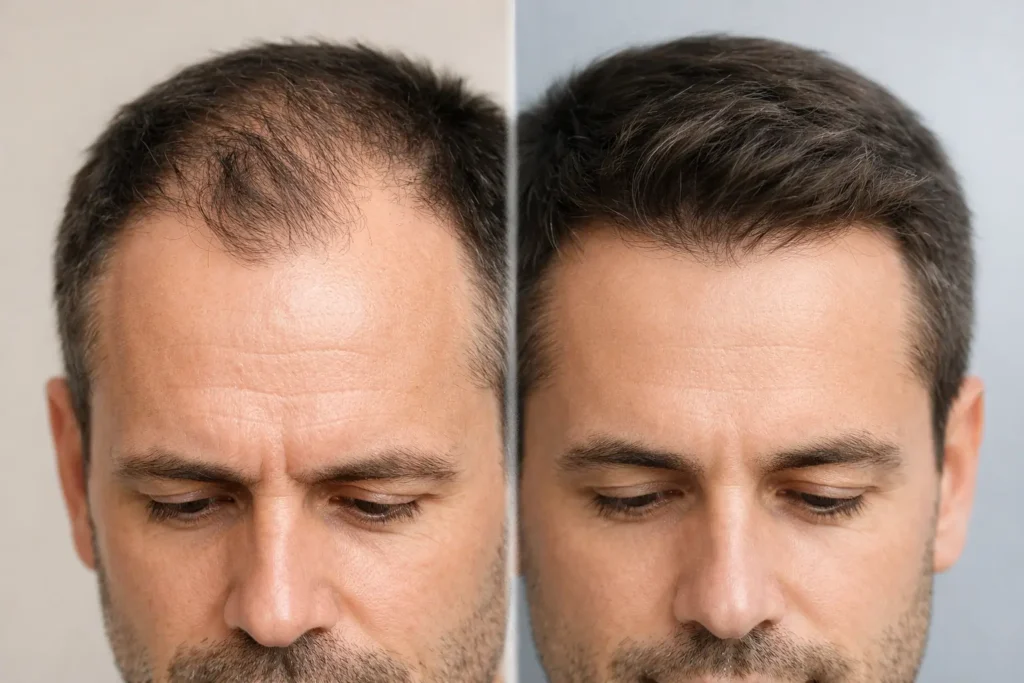
Whether widening part hair loss can be reversed depends on the cause. Temporary shedding often resolves with time. Pattern hair loss is usually progressive, but early treatment can slow or stabilize the process and, in some cases, improve density.
The earlier changes are identified, the more treatment options are available.
Treatment Options for Hair Part Widening and Hair Loss
For those looking to improve hair density, professional hair loss treatment options vary based on diagnosis but may include:
- Medical therapies to support hair growth
- Nutritional correction when deficiencies are present
- Gentle hair care and reduced tension along the part
- Styling adjustments to minimize stress on thinning areas
Consistency and early intervention play a major role in outcomes.
Key Takeaway: What to Do If Your Hair Part Is Getting Wider
Hair part widening is often the first visible sign that hair density may be changing. While it does not always mean permanent hair loss, a progressively widening part should not be ignored. Understanding the difference between normal variation and widening part hair loss allows you to take informed action early.
If the change persists or worsens, a proper assessment can provide clarity and help protect long term hair health.