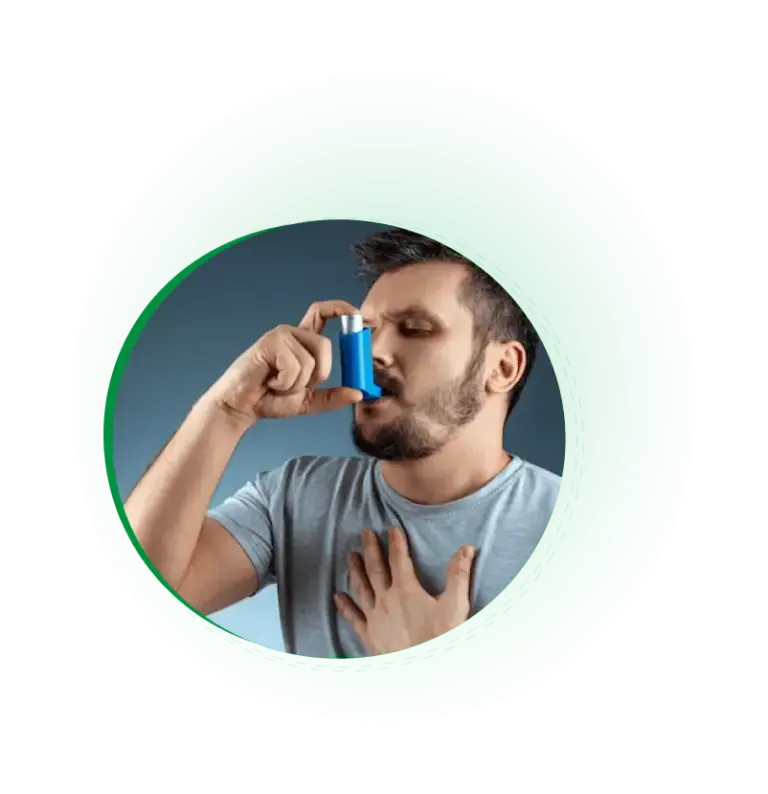


Asthma symptoms can come and go. Some people experience symptoms only occasionally, while others find that coughing, wheezing or breathlessness affects exercise, sleep or everyday activities.
Symptoms are often worse at night or early in the morning and may be triggered by exercise, cold air, infections, smoke, air pollution or allergens. Keeping asthma well controlled can reduce symptoms and lower the risk of asthma attacks.
Common asthma symptoms include:
Asthma can affect people differently, and symptoms may change over time.
Symptoms can vary from day to day, and you may feel completely well between episodes.
Asthma symptoms occur when the airways become inflamed and narrower, making it more difficult for air to move in and out of the lungs.
The exact reason some people develop asthma is not fully understood, but genetic and environmental factors can both contribute.
You may be more likely to develop asthma if you or close family members have asthma, eczema, hay fever or other allergic conditions.
Asthma triggers differ between people, so identifying your own triggers can be an important part of controlling symptoms.
Alongside appropriate treatment, simple lifestyle measures can help reduce symptoms and lower the risk of asthma attacks.
Keep track of situations that make your asthma worse, such as pollen, smoke, cold weather or certain animals, and reduce exposure where practical.
Smoking can irritate the airways and make asthma more difficult to control. Avoid second-hand smoke where possible as well.
Regular exercise is beneficial for general health. If exercise triggers symptoms, speak to your healthcare professional about how to exercise safely.
Maintaining a healthy weight may support breathing and general health.
Your personalised action plan should explain your usual treatment, how to recognise worsening asthma and what action to take if symptoms increase.
Asthma should be reviewed regularly. Your healthcare professional can check symptom control, inhaler technique and whether your asthma action plan remains appropriate.
Speak to a healthcare professional if you develop symptoms that could be asthma or if your diagnosed asthma is becoming harder to control.
Seek medical advice if:
If you recover from an asthma attack, the NHS advises arranging an urgent medical review within 2 days so your treatment and asthma action plan can be reviewed.
There is no standard list of foods that everyone with asthma needs to avoid.
Food allergies can sometimes occur alongside asthma, but asthma itself does not require a special exclusion diet.
There is no particular food or supplement proven to cure asthma. A healthy, balanced diet can support general wellbeing and help maintain a healthy weight.
Helpful choices include:
Diet should support general health rather than replace your prescribed asthma treatment or asthma action plan.
Asthma is a long-term condition affecting the airways. The airways can become inflamed and narrow, causing symptoms such as wheezing, coughing, chest tightness and shortness of breath.
The main symptoms are wheezing, coughing, shortness of breath and chest tightness. Symptoms often come and go and may become worse at night, early in the morning or after exposure to a trigger.
Common triggers include pollen, dust mites, mould, animals, smoke, air pollution, cold air, exercise and respiratory infections. Triggers vary between individuals.
Yes. Although asthma often begins during childhood, it can develop at any age. New breathing symptoms in adults should be appropriately assessed rather than assuming they are asthma.
Asthma should not be diagnosed from symptoms alone. A healthcare professional will usually take a detailed history and may carry out objective breathing tests to confirm whether asthma is present.
There is currently no cure for asthma, but appropriate treatment can usually control symptoms and allow people to continue normal everyday activities.
Exercise can trigger symptoms in some people, but having asthma does not mean you should avoid physical activity. Regular exercise is recommended, and a healthcare professional can advise how to exercise safely if activity triggers your symptoms.
Asthma symptoms can naturally vary throughout the day and may become worse at night or early in the morning. Night-time symptoms can also be a sign that asthma is not adequately controlled and should be discussed with a healthcare professional.
Yes. Allergens such as pollen, house-dust mites, mould and animals can trigger asthma symptoms in some people. People with asthma are also more likely to have allergic conditions such as hay fever or eczema.
Yes. Cigarette smoke can irritate the airways and trigger asthma symptoms. The NHS recommends not smoking and avoiding asthma triggers such as smoke wherever possible.
An asthma action plan is a personalised written or digital plan explaining how to manage your asthma. It should include information about your usual treatment, triggers, how to recognise worsening symptoms and what to do during an asthma attack.
People with asthma should have regular reviews to check symptom control, inhaler technique and their asthma action plan. The NHS advises having an asthma check-up at least once a year.
Seek urgent medical help if your breathing becomes significantly worse, you experience a severe asthma attack or your symptoms do not improve after following your emergency asthma plan. A severe asthma attack can be life-threatening, so call 999 when emergency criteria are met.
Pharmaceutra provides an online consultation service for eligible patients requesting asthma treatment. A prescriber reviews the information provided to determine whether the requested treatment is clinically appropriate.
Safe. Secure. Trusted

From consultation to delivery, Pharmaceutra makes accessing prescription treatments seamless.
Complete our quick, confidential online health questionnaire. Our prescribers review your answers, usually within the hour.
A UK-registered prescriber reviews your submission and, if suitable, approves and issues your personalised prescription.

Your medication is dispensed by our pharmacists and shipped in discreet packaging with free tracked next-day delivery.