News & Updates
Receding Hairline vs Maturing Hairline: How to Tell the Difference (Complete Guide)
20 March 2026
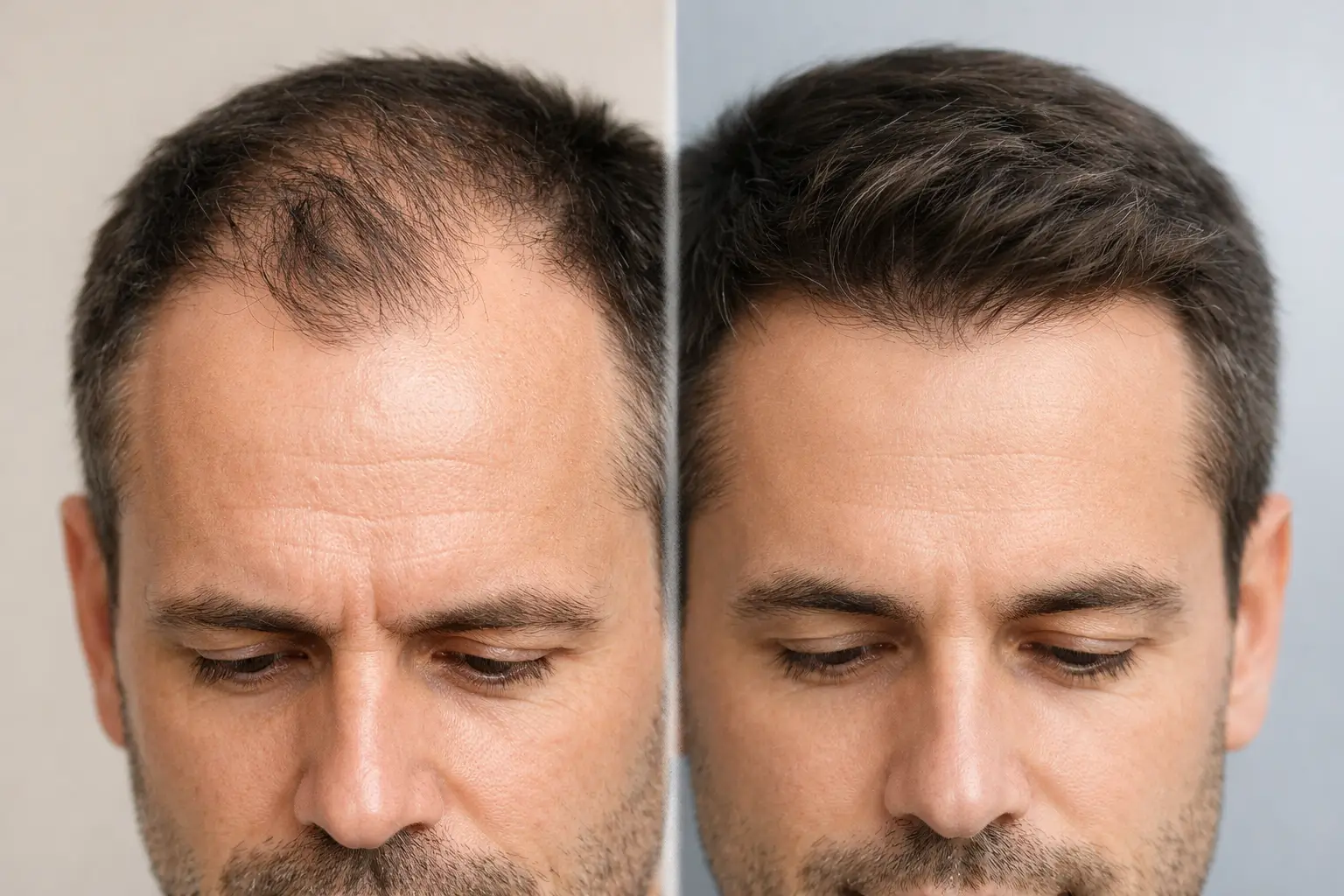
Table of content
Hairline changes can feel sudden, even when they’re happening gradually. One day everything looks normal, and then you notice your temples shifting or your forehead appearing slightly larger. That’s when the question comes up: is this just a maturing hairline, or is it the start of hair loss?
This guide explains the difference in a clear and practical way. Instead of focusing only on how your hairline looks, we’ll look at how it behaves over time, what causes these changes, and how you can assess your situation without guesswork.
What Is a Maturing Hairline?
A maturing hairline is a natural shift from a juvenile hairline to an adult one. It usually begins in the late teens or early twenties and settles over time.
When you’re younger, your hairline tends to sit lower and straighter across the forehead. As you age, it moves slightly upward and becomes more defined. This is not hair loss. It is a normal biological change influenced by hormones.
What makes it different from hair loss is that it stabilizes. Once the hairline matures, it generally stays in place without continuing to move back.
You are likely dealing with a maturing hairline if:
- The change is gradual and not aggressive
- The temples shift slightly but evenly
- Hair density remains the same across the front
- There is no visible thinning or patchiness
- The hairline has stayed stable after the initial change
In simple terms, your hairline may look different, but your hair still feels just as thick.
What Is a Receding Hairline?
A receding hairline is often an early sign of male pattern hair loss. Unlike a maturing hairline, this is not a one-time shift. It continues to progress over time.
It usually starts at the temples, but instead of stopping after a slight change, it keeps moving backward. Over time, the hair becomes thinner and less dense in those areas.
Common signs of a receding hairline include:
- Deepening recession at the temples over time
- Hair near the hairline appearing thinner or weaker
- Difficulty styling hair due to reduced density
- More visible scalp under light
- Thinning at the crown along with frontal recession
This condition is largely influenced by genetics and sensitivity to DHT, a hormone that weakens hair follicles gradually.
The Real Difference Comes Down to Pattern
At first, both types of hairline changes can look similar. The confusion usually comes from focusing only on the shape.
A better way to understand it is by looking at how it behaves over time.
- A maturing hairline changes once and then stabilizes
- A receding hairline continues to move backward over time
This difference in progression is the most reliable way to identify what’s happening.
How to Check Your Hairline Properly
Instead of guessing, use a more practical approach to assess your hairline.
Compare Old Photos
Look at pictures from two to five years ago. If the change is minor and has not progressed recently, it is likely a maturing hairline. If it keeps moving back, it may be receding.
Check Hair Thickness
Pay attention to how the hair feels near your temples. If it feels thinner or finer than the rest, that can be an early sign of hair loss.
Observe Hair Fall
Some shedding is normal, but consistent or excessive hair fall over time can indicate a problem.
Look at Family History
If early hair loss runs in your family, there is a higher chance that your hairline changes may be progressive.
Understanding the Norwood Scale
The Norwood Scale is commonly used to classify hairline patterns.
- Norwood 1: Straight, low hairline
- Norwood 2: Slight temple recession, often a mature hairline
- Norwood 3 and above: More noticeable and progressive hair loss
If your hairline stays around Norwood 2 and does not progress, it is usually not a concern.
Common Mistakes People Make
One of the most common mistakes is assuming that any change means hair loss. A slight shift is often normal.
Another issue is judging based on a single moment. Lighting, hairstyle, and angle can all affect how your hairline looks.
On the other hand, some people ignore clear signs of thinning and delay taking action when it actually matters.
When Should You Take Action?
You should consider professional advice if:
- Your hairline continues to move back over time
- You notice thinning along with the change
- The crown area also starts losing density
- Hair loss begins to affect your confidence
Early assessment can help you understand whether treatment is needed or not.
Treatment vs Maintenance
If your hairline is maturing, no treatment is required. Focus on maintaining overall hair health through proper nutrition, scalp care, and avoiding excessive styling damage.
If it is a receding hairline, early intervention can help slow the process.
- Medications like minoxidil or finasteride (under guidance)
- Balanced diet with adequate protein and nutrients
- Managing stress and improving sleep quality
- Avoiding harsh styling practices
Final Thoughts
Hairline changes are common, but not all changes mean hair loss. A maturing hairline is a natural and stable shift, while a receding hairline is progressive and may need attention.
The key is to observe patterns over time rather than reacting to a single change. That’s what gives you a clear and accurate answer.
Frequently Asked Questions
1. At what age does a maturing hairline start?
A maturing hairline usually begins between 17 and 25 and may settle by the late twenties, depending on genetics.
2. Can a maturing hairline turn into a receding hairline?
Yes. A mature hairline can remain stable, but some people may experience hair loss later due to genetic factors.
3. How long does it take to confirm a receding hairline?
It typically becomes clear over 6 to 24 months. Continuous movement or thinning during this time indicates a receding hairline.
4. Is temple recession always a sign of balding?
No. Mild and even temple recession is a normal part of a maturing hairline. It becomes a concern only if it progresses or includes thinning.
5. What is the quickest way to check if you are losing hair?
Comparing old photos, checking hair thickness, and consulting a dermatologist are the most reliable ways to confirm hair loss.