News & Updates
Hair Loss in Your 30s: What Changes and What You Can Do
4 March 2026

For many people, hair loss becomes noticeable for the first time during their 30s. You may start seeing more hair in the shower drain, a widening hair part, or a slightly receding hairline. These early changes often create anxiety because hair loss is commonly associated with older age.
However, hair thinning after 30 is more common than most people realize. Some individuals may even begin experiencing thinning earlier due to genetics or lifestyle factors. In fact, hair loss can sometimes start earlier in life, and understanding the signs of hair loss in your twenties can help people recognize early warning signals before the condition progresses.
The important thing to understand is that early hair thinning does not always mean permanent hair loss. When the underlying causes are identified early, many people are able to slow the process and maintain healthy hair for years.
This guide explains what changes in your 30s, why hair loss may start during this decade, and what practical steps can help protect your hair health.
Is Hair Loss in Your 30s Normal?
Yes, experiencing some level of hair thinning in your 30s is relatively common.
Hair naturally goes through a continuous cycle of growth, rest, and shedding. A healthy scalp can contain around 100,000 hair follicles, and each follicle follows its own growth cycle. Most people normally shed between 50 and 100 hair strands per day. This type of shedding is completely normal and part of the natural renewal process.
Hair loss becomes noticeable when one of the following happens:
- Shedding increases beyond normal levels
- Hair regrowth becomes weaker or slower
- Hair follicles begin producing thinner strands
When these changes occur gradually over time, hair density may begin to decrease. The good news is that hair loss detected early in your 30s often responds better to treatment and lifestyle changes compared to later stages of hair thinning.
Why Hair Loss Often Begins in Your 30s
Your 30s represent a transition period for the body. Several subtle changes begin occurring that can influence hair growth.
Hormonal sensitivity
Hair follicles are sensitive to hormonal activity, particularly a hormone called dihydrotestosterone (DHT). In individuals who are genetically predisposed, DHT can gradually shrink hair follicles. This process is called follicle miniaturization, where the follicles produce thinner and shorter hair strands over time.
Gradual slowing of the hair growth cycle
Hair grows through three stages:
- Anagen – Active growth phase
- Catagen – Transition phase
- Telogen – Resting phase
During your younger years, hair typically stays in the anagen phase for several years, allowing strands to grow long and thick.
Increased lifestyle stress
Your 30s are often associated with higher life pressures such as career responsibilities, financial commitments, and family obligations. Stress can trigger a condition called telogen effluvium, where a large number of hair follicles prematurely enter the resting phase and begin shedding. If you notice excessive or unexpected shedding, it may help to understand the causes of sudden hair fall and what you can do about it.
The Hair Growth Cycle Explained
Understanding the hair growth cycle helps explain why hair thinning occurs.
1. Anagen phase – Growth stage
This is the active growth stage of hair. Hair can grow about 0.3 to 0.4 millimeters per day during this phase. The anagen phase can last 2 to 7 years, depending on genetics and overall health.
2. Catagen phase – Transition stage
This short phase lasts around 2 to 3 weeks. Hair growth slows and the follicle begins to shrink.
3. Telogen phase – Resting stage
Hair remains in a resting state for about 3 months before shedding naturally. At any time, about 10 to 15 percent of hair follicles are in the telogen phase.
When factors such as stress, hormonal imbalance, or illness push more follicles into this stage, excessive shedding may occur.
Common Causes of Hair Loss in Your 30s
Hair loss is usually influenced by several factors rather than a single cause.
1. Genetic hair loss
The most common cause of hair thinning in your 30s is androgenetic alopecia, also known as pattern hair loss.
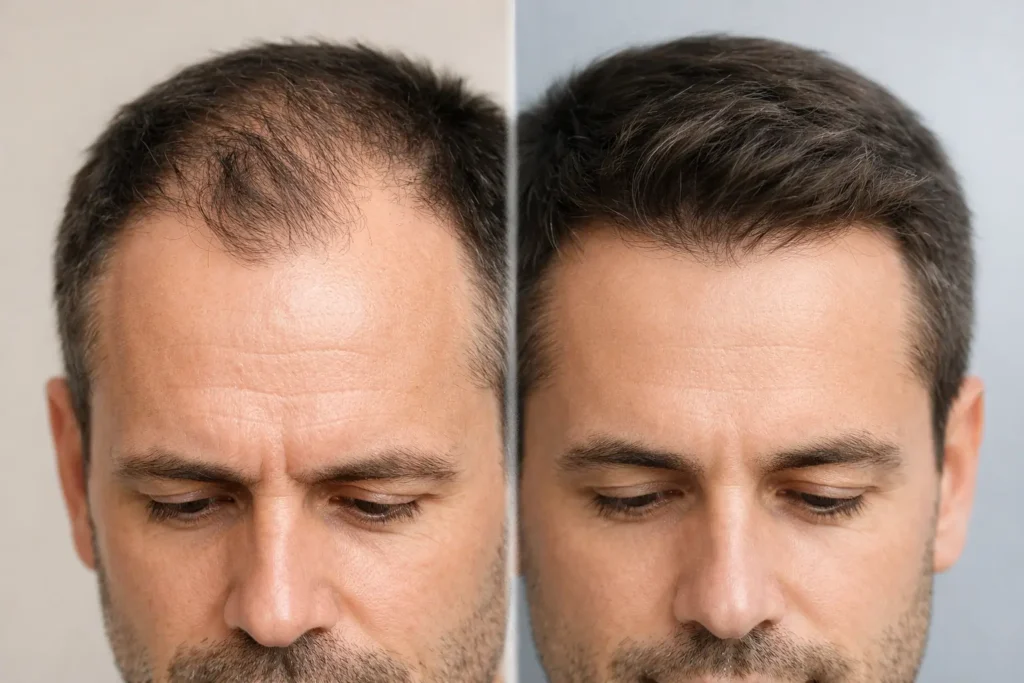
Men often experience:
- Receding hairline
- Thinning at the crown
- Gradual loss of density on the top of the scalp
Women usually experience:
- Widening hair part
- Overall thinning across the scalp
- Reduced hair volume
Genetics determine how sensitive your follicles are to DHT.
2. Stress related hair shedding
Stress can trigger telogen effluvium, where many follicles shift into the resting phase at the same time.
Common triggers include:
- Emotional stress
- Illness or surgery
- Rapid weight loss
- Major life events
Hair shedding may appear two to three months after the triggering event.
3. Hormonal imbalance
Hormonal fluctuations can significantly affect hair growth, particularly in women.
Possible conditions include:
- Thyroid disorders
- Polycystic ovary syndrome (PCOS)
- Postpartum hormonal changes
- Changes in birth control methods
These hormonal shifts can weaken hair follicles and disrupt the growth cycle.
4. Nutritional deficiencies
Hair follicles require adequate nutrients to maintain healthy growth.
Common deficiencies linked to hair thinning include:
- Iron deficiency
- Vitamin D deficiency
- Low protein intake
- Zinc deficiency
- Vitamin B12 deficiency
Poor dietary habits or restrictive diets can weaken hair over time.
Early Signs of Hair Thinning After 30
Hair thinning usually begins gradually. Many people notice subtle changes before significant hair loss occurs.
Early warning signs include:
- A wider hair part than before
- Scalp becoming visible under bright light
- Increased hair shedding during washing
- Thinner ponytail or braid
- Slower hair regrowth after haircuts
Identifying these signs early can help you take action before hair density declines further.
How to Slow Down Hair Loss in Your 30s
Although some forms of hair loss are genetic, lifestyle improvements can support healthier hair growth.
Improve your nutrition
Hair follicles rely on a steady supply of nutrients. Important nutrients for hair growth include:
- Protein sources: Eggs, Fish, Lentils, Yogurt
- Iron rich foods: Spinach, Red meat, Chickpeas, Pumpkin seeds
- Healthy fats: Walnuts, Flaxseeds, Fatty fish
A balanced diet supports stronger hair strands and healthier follicles.
Manage stress levels
Reducing chronic stress can improve overall hair health.
Helpful strategies include:
- Regular physical exercise
- Meditation or breathing techniques
- Maintaining consistent sleep routines
- Limiting excessive caffeine
Healthy stress management helps regulate hormones that influence hair growth.
Improve scalp care
A healthy scalp supports stronger hair follicles.
Simple scalp care habits include:
- Using mild shampoos
- Avoiding excessive heat styling
- Minimizing harsh chemical treatments
- Keeping the scalp clean and hydrated
Gentle hair care practices reduce unnecessary damage to hair strands.
Treatments That Can Help Hair Loss
If hair thinning becomes noticeable, medical treatments may help slow the progression. Common treatment approaches include:
- Dermatologist recommended medications
- Some medications help slow follicle miniaturization and stimulate regrowth.
- Hair stimulation therapies
Certain dermatology clinics offer treatments such as:
- Platelet rich plasma (PRP) therapy
- Low level laser therapy
- Scalp microneedling
These treatments aim to improve follicle activity and scalp circulation.
Common Myths About Hair Loss After 30
Many misconceptions about hair loss circulate online.
Hair loss myth: Wearing hats causes baldness
Reality: Hats do not affect hair follicles.
Hair loss myth: Cutting hair frequently makes it thicker
Reality: Hair thickness is determined by follicle size, not haircut frequency.
Hair loss myth: Shampoo causes hair loss
Reality: Hair that falls during washing has usually already entered the shedding phase.
Understanding these myths helps prevent unnecessary worry.
When Should You See a Doctor?
While mild hair thinning can be normal, some symptoms require medical evaluation.
Consult a doctor if you notice:
- Sudden or rapid hair loss
- Patchy bald spots
- Severe scalp irritation
- Significant shedding lasting several months
If you notice large amounts of hair shedding at once or hair falling out in clumps, it may indicate a more serious condition. In such cases, understanding the causes of hair falling out in clumps can help you determine when professional evaluation is necessary.
A dermatologist can evaluate underlying causes and recommend targeted treatments.
Can Hair Loss in Your 30s Be Reversed?
The ability to reverse hair loss depends on the cause.
Hair loss caused by:
- Stress
- Nutritional deficiencies
- Temporary hormonal imbalance
May improve once the underlying issue is addressed.
Genetic hair loss is usually progressive, but early treatment can:
- Slow the rate of thinning
- Preserve existing hair
- Improve hair density
Early action significantly improves long term outcomes.
Preventing Hair Thinning After 30
Long term hair health depends on consistent habits.
To maintain healthy hair:
- Maintain a balanced diet
- Manage stress effectively
- Avoid excessive chemical treatments
- Protect scalp health
- Seek medical advice when hair thinning begins
For a broader understanding of symptoms, causes, and treatment options, you can also explore a detailed guide on hair loss and available treatments.
Final Thoughts
Hair loss in your 30s can feel concerning, but it is often manageable when addressed early. Understanding how hair growth works and recognizing the early warning signs allows you to take proactive steps.
By maintaining healthy habits, managing stress, and seeking medical guidance when needed, many people can slow hair thinning and support healthier hair growth over time.
The earlier you act, the better your chances of preserving strong and healthy hair throughout the years ahead