News & Updates
Dandruff vs Dry Scalp Explained: Symptoms, Causes, and What Actually Works
18 May 2026
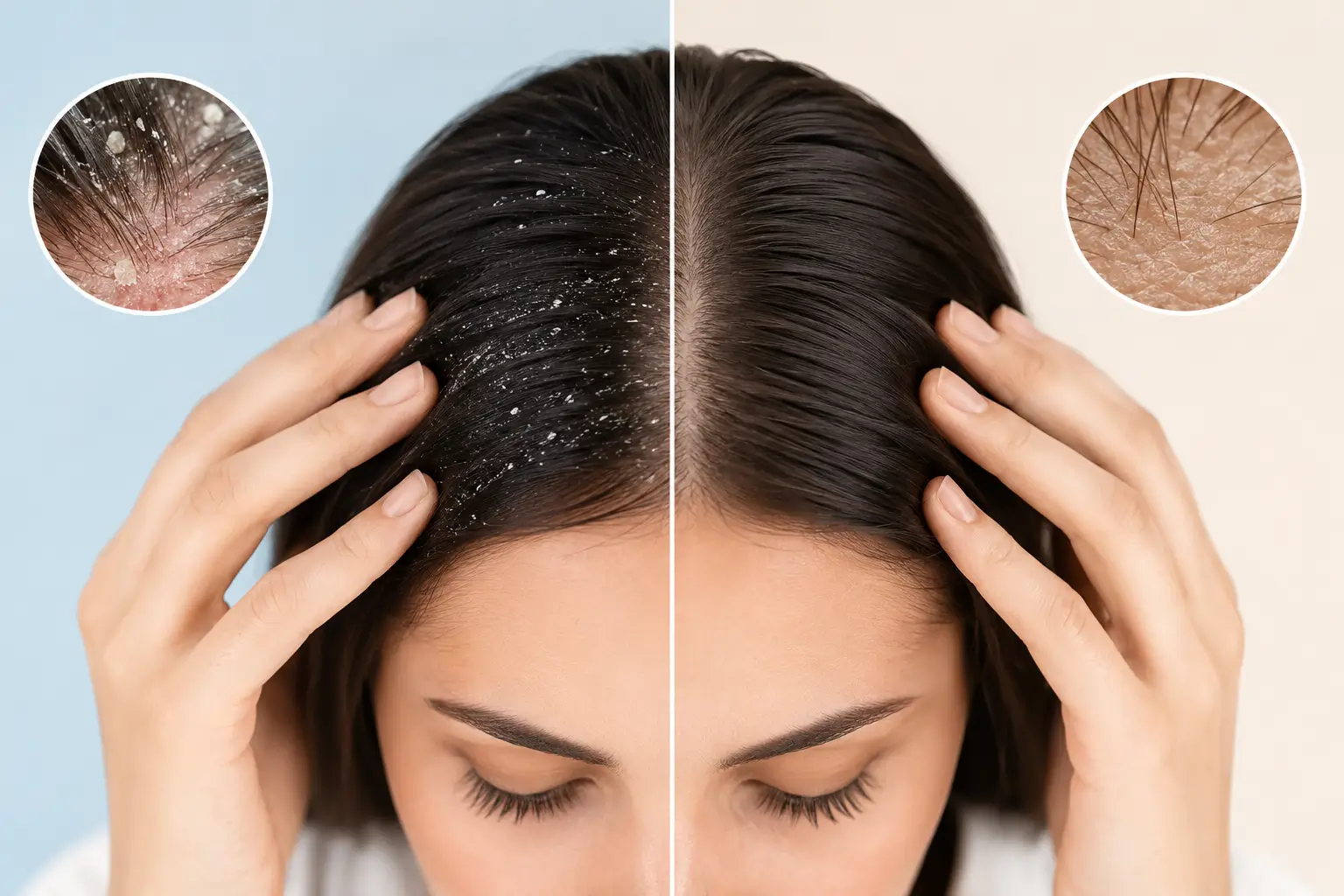
Scalp flaking is often treated as a single problem, but that assumption leads to poor results. Dandruff and dry scalp may appear similar, yet they develop from different mechanisms and require different treatment approaches.
A correct understanding is essential. Treating dandruff as dryness or dryness as dandruff not only delays improvement but can also worsen the condition. This guide breaks down both issues with clear distinctions so you can identify and address them effectively.
What Is Dandruff?
Dandruff is a common scalp condition associated with excess sebum production and microbial imbalance.
The scalp naturally hosts a yeast called Malassezia. Under normal conditions, it remains harmless. However, when oil production increases, this yeast multiplies and breaks down sebum into irritating byproducts.
This irritation accelerates skin cell turnover. Instead of shedding gradually, dead skin cells accumulate and form visible flakes, often mixed with oil.
Dandruff is therefore not a dryness issue. It is primarily an oil-driven inflammatory response linked to microbial activity.
What Is Dry Scalp?
Dry scalp is a condition caused by insufficient moisture in the scalp’s outer layer.
When the skin barrier becomes compromised due to environmental factors or harsh products, it loses its ability to retain hydration. This results in dryness, tightness, and fine flaking.
Unlike dandruff, dry scalp does not involve fungal overgrowth or excess oil. It is a barrier and hydration issue, similar to dry skin on other parts of the body.
Dandruff vs Dry Scalp: Key Differences
| Parameter | Dandruff | Dry Scalp |
|---|---|---|
| Underlying cause | Excess oil and yeast activity | Lack of moisture and weak skin barrier |
| Flake type | Larger, clumped, slightly greasy | Small, fine, powdery |
| Scalp condition | Oily, sometimes inflamed | Dry, tight, rough |
| Itching intensity | Moderate to severe | Mild to moderate |
| Response to oil | May worsen | Usually improves |
The most reliable indicator is the condition of the scalp itself, not just the flakes.
Common Causes Breakdown
Causes of dandruff
- Overactive sebaceous glands
- Growth of Malassezia yeast
- Infrequent cleansing leading to oil buildup
- Hormonal fluctuations
- Stress and lifestyle factors
Causes of dry scalp
- Low humidity or cold weather
- Frequent washing with harsh shampoos
- Hot water exposure
- Dehydration
- Underlying skin conditions such as eczema
These causes differ significantly, which is why a single treatment approach is ineffective.
Symptoms You Should Not Ignore
Dandruff symptoms
- Noticeable flakes that adhere to hair or fall onto clothing
- Oily scalp even shortly after washing
- Persistent itching
- Mild redness or irritation
Dry scalp symptoms
- Tightness, especially after washing
- Fine, loose flakes
- Dull or rough scalp texture
- Associated dryness in other areas of the body
A tight, uncomfortable scalp is a strong indicator of dryness rather than dandruff.
How to Identify Your Condition Correctly
Accurate identification requires simple observation:
1. Assess scalp texture
- Oily or greasy feel suggests dandruff
- Dry or tight feel suggests dry scalp
2. Observe flake characteristics
- Thick and sticky flakes indicate dandruff
- Light and powdery flakes indicate dryness
3. Evaluate your routine
- Infrequent washing and product buildup point toward dandruff
- Over washing and use of harsh products point toward dryness
4. Test response to oil application
- Worsening flakes suggest dandruff
- Relief and reduced flaking suggest dry scalp
This step is critical. Without proper identification, treatment becomes ineffective.
Treatment for Dandruff
Effective dandruff management focuses on controlling yeast and regulating oil.
Recommended approach
- Use shampoos containing ketoconazole, zinc pyrithione, or selenium sulfide
- Wash regularly to prevent oil accumulation
- Allow the shampoo to remain on the scalp for a few minutes before rinsing
Practices to avoid
- Excessive oil application
- Skipping washes
- Frequent switching between products
Dandruff requires consistent management rather than one-time treatment.
Treatment for Dry Scalp
Dry scalp treatment aims to restore moisture and repair the skin barrier.
Recommended approach
- Use gentle, hydrating shampoos
- Reduce washing frequency if excessive
- Apply light oils or moisturizing treatments
- Use lukewarm water instead of hot water
Practices to avoid
- Daily use of strong anti dandruff shampoos
- Over exposure to heat and harsh chemicals
Improvement depends on maintaining hydration and minimizing irritation.
What Happens If You Use the Wrong Treatment
Incorrect treatment often worsens the condition:
- Using anti dandruff products on dry scalp can strip essential oils and increase irritation
- Applying oils on dandruff can promote yeast growth and increase flaking
This is why proper diagnosis is more important than the product itself.
When to See a Doctor
Professional evaluation is necessary if:
- Symptoms persist despite consistent treatment
- There is significant redness, inflammation, or discomfort
- Thick scaling or patches develop
- Hair loss occurs alongside flaking
If you are also noticing excessive shedding along with scalp issues, it may be worth understanding the broader causes and hair loss treatment options, as scalp health and hair fall are often interconnected.
Prevention Tips
- Maintain a balanced scalp care routine
- Select products based on scalp type rather than trends
- Avoid excessive washing or product buildup
- Adjust care routines based on seasonal changes
- Support overall skin health through hydration and nutrition
Consistency and balance are key to long term scalp health.
Conclusion
Dandruff and dry scalp may share a common symptom, but they are fundamentally different conditions.
Dandruff is driven by oil and microbial imbalance, while dry scalp results from insufficient moisture. Treating them with the same approach leads to poor outcomes.
A clear understanding of your scalp condition allows for targeted treatment and better results over time.