3 August 2026
If you’re new to acne treatment, you’ve probably come across Differin Gel while searching for an effective solution. Unlike traditional spot treatments that only target existing pimples, Differin works beneath the skin’s surface to prevent new breakouts from forming. This makes it one of the most trusted topical treatments for managing mild to moderate acne over the long term.
However, using Differin correctly is just as important as choosing the treatment itself. Applying too much, using it too often, or combining it with the wrong skincare products can lead to dryness, redness, and irritation, especially during the first few weeks. Many people stop treatment too early because they don’t know what to expect, missing out on the improvements that come with consistent use.
This beginner’s guide explains how to use Differin Gel correctly, when to apply it, how often to use it, what results to expect, and the common mistakes to avoid. Whether you’re starting acne treatment for the first time or switching from another product, this guide will help you build a routine that supports clearer, healthier-looking skin.
Differin Gel is a topical acne treatment containing adapalene 0.1%, a third-generation retinoid developed specifically to treat acne. It works by increasing skin cell turnover, preventing pores from becoming blocked, and reducing inflammation that leads to spots and breakouts.
Unlike products that simply dry out existing pimples, Differin addresses one of the root causes of acne. With regular use, it helps prevent new blemishes while improving the overall appearance and texture of the skin.
Many dermatologists recommend Differin as a first-line treatment for people with mild to moderate acne because it offers proven long-term benefits when used consistently.
Adapalene belongs to a group of medicines called topical retinoids, which are derived from vitamin A. It was developed specifically for acne treatment and is generally better tolerated than some older prescription retinoids.
Adapalene works by:
Unlike harsh exfoliating products, adapalene works at a cellular level to treat acne before visible spots appear.
Acne develops when excess oil, dead skin cells, and bacteria block hair follicles. This creates an environment where inflammation and pimples can develop.
Differin interrupts this process by:
Because it targets acne at an early stage, Differin is most effective when applied consistently across the entire acne-prone area rather than only on individual spots.
Differin Gel may be suitable for people who have:
It can also be recommended for some people with persistent adult acne as part of a wider treatment plan.
If you have severe acne, widespread cystic acne, or significant scarring, speak to a healthcare professional, as you may require additional treatments alongside a topical retinoid.
Differin has become one of the most widely recommended topical retinoids because it treats both existing acne and the underlying processes that cause future breakouts. While results take time, consistent use can lead to long-term improvements in skin clarity and texture.
Differin reduces inflammation within blocked pores, helping active spots heal more effectively. Over time, many users notice fewer inflamed pimples and less persistent congestion.
One of Differin’s biggest advantages is prevention. By keeping pores clear before blockages develop into visible spots, it helps reduce the number of future breakouts.
This preventive action is why dermatologists recommend applying it to the entire acne-prone area instead of only treating individual pimples.
Blocked pores are the starting point for many types of acne. Differin increases skin cell turnover, helping prevent dead skin cells and excess oil from accumulating inside pores.
Regular use may reduce:
Inflammation contributes to the redness, swelling, and discomfort associated with acne. Adapalene has anti-inflammatory properties that help calm irritated skin over time.
As skin renews itself more efficiently, many users notice smoother skin and a more even complexion after several weeks of consistent treatment.
Unlike quick-fix spot treatments, Differin is designed for ongoing acne management. Continued use helps maintain clearer skin and reduce recurring breakouts.
Starting a retinoid can feel daunting, especially if you’ve heard about dryness or “purging.” Understanding how to prepare your skin and what to expect can make the adjustment period much easier.
Differin can be used by many people with acne-prone skin, including those with:
If you have dry or sensitive skin, you may still be able to use Differin, but it often helps to begin by applying it only two or three evenings each week and increasing frequency gradually as your skin adjusts.
Differin may not be appropriate in certain situations. Speak to a healthcare professional before use if you:
If your acne is severe, painful, or leaving scars, a healthcare professional can advise whether a different or additional treatment would be more appropriate.
Although not always required, patch testing can be helpful if you have sensitive skin or are prone to reactions.
To patch test:
Using Differin correctly improves its effectiveness while reducing the likelihood of irritation. The key is consistency rather than quantity. Applying more gel or using it more often than recommended will not clear acne faster and may increase side effects.
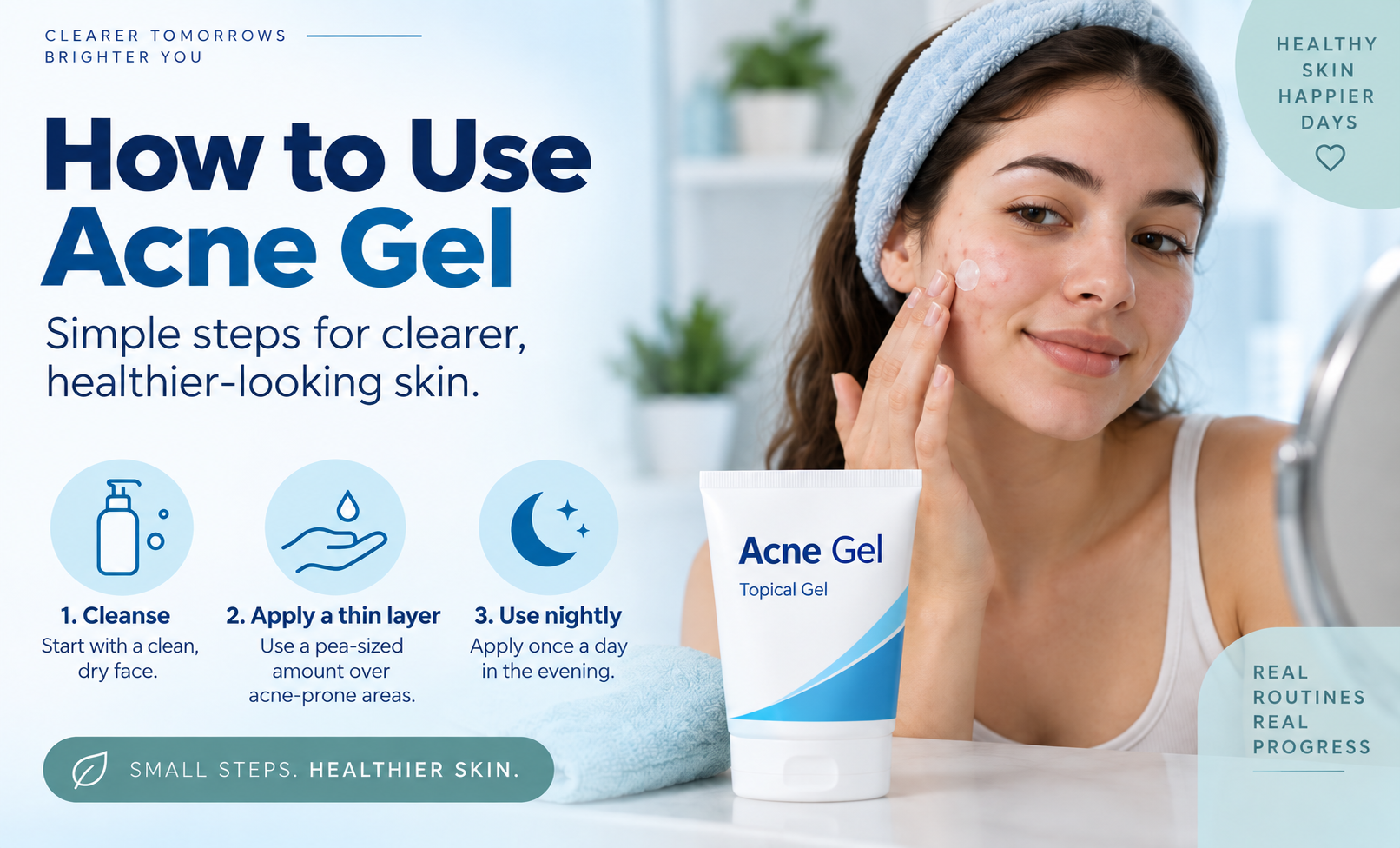
Start by cleansing your face with a mild, fragrance-free cleanser to remove oil, dirt, makeup, and sunscreen.
Avoid:
Rinse thoroughly with lukewarm water and gently pat your face dry using a clean towel.
This step is often overlooked but can make a significant difference.
Applying Differin to damp skin may increase absorption, which can make irritation more likely. Wait until your skin is completely dry before moving on to the next step.
If your skin is particularly sensitive, waiting 10 to 20 minutes after cleansing before applying the gel may help reduce irritation during the first few weeks.
One of the most common beginner mistakes is using too much product.
For your entire face, a single pea-sized amount is usually enough.
Using more will not improve results. Instead, it may lead to increased dryness, peeling, and redness without making the treatment work faster.
Rather than applying Differin only to visible pimples, spread a thin, even layer across the areas where you typically experience breakouts, such as the forehead, cheeks, chin, or jawline.
This preventive approach helps stop new blemishes from forming before they become visible.
Avoid applying the gel directly to:
Once you’ve applied the gel, wash your hands thoroughly to avoid accidentally transferring the medication to sensitive areas such as your eyes.
If your skin feels dry or tight, apply a gentle, non-comedogenic moisturiser after Differin has absorbed.
Using a moisturiser regularly can help protect the skin barrier and improve comfort, especially during the first few weeks of treatment.
Key Takeaway: Consistent, correct application is far more effective than applying larger amounts. A pea-sized layer over the full acne-prone area each evening gives Differin the best chance to work while helping minimise irritation.
One of the most common questions beginners ask is “Should I use Differin in the morning or at night?”
For most people, applying Differin Gel in the evening is the recommended approach. Night-time application allows the medication to work while your skin naturally repairs itself and reduces exposure to sunlight, which can make your skin more sensitive during treatment.
Although adapalene is more stable than some older retinoids, daily sun protection remains essential because your skin may become more susceptible to UV damage while adjusting to treatment.
| Morning Application | Evening Application |
|---|---|
| Generally not recommended | Recommended for most users |
| Increased exposure to sunlight | Lower UV exposure |
| May interfere with daytime skincare or makeup | Fits easily into a night-time routine |
| Higher chance of irritation if sunscreen isn’t used properly | Better tolerated by most people |
Yes, once your skin has adjusted. Beginners often benefit from starting two to three evenings per week before gradually increasing to nightly use.
Some people notice early improvements within four to eight weeks, but meaningful results often take 8 to 12 weeks of consistent use. Continued treatment helps maintain clearer skin and reduce future breakouts.
Yes. Applying a non-comedogenic moisturiser after Differin can help reduce dryness and support your skin barrier. People with sensitive skin may also benefit from the moisturiser sandwich method.
Yes, provided you choose non-comedogenic makeup products and remove them thoroughly each evening before applying Differin.
No. Differin works best when applied as a thin layer across the entire acne-prone area rather than only on visible spots. This helps prevent new blemishes from forming.
If you’ve decided that Differin Gel is suitable for your acne treatment plan, it’s important to purchase it from a trusted provider.
Buying from a registered UK online pharmacy helps ensure you receive genuine medication, appropriate clinical guidance and support throughout your treatment.
At Pharmaceutra, you can complete a convenient online consultation, which is reviewed by qualified healthcare professionals. If Differin is clinically appropriate, your treatment can be prescribed and delivered directly to your chosen address.
When ordering through Pharmaceutra, you benefit from:
Looking to buy Differin Gel online? Pharmaceutra offers a secure online consultation to help determine whether Differin Gel is a suitable treatment option for your acne.
Differin Gel is a well-established treatment that tackles acne by addressing one of its underlying causes rather than simply treating existing spots. While it isn’t an overnight solution, consistent use can lead to fewer breakouts, smoother skin and improved confidence over time.
To get the best results:
Building a simple, consistent skincare routine is often the key to long-term acne control. By using Differin correctly and sticking with your treatment plan, you’ll give your skin the best chance of achieving clearer, healthier-looking results.