News & Updates
Weight Loss Injections vs Pills: Which Should You Choose?
22 April 2026
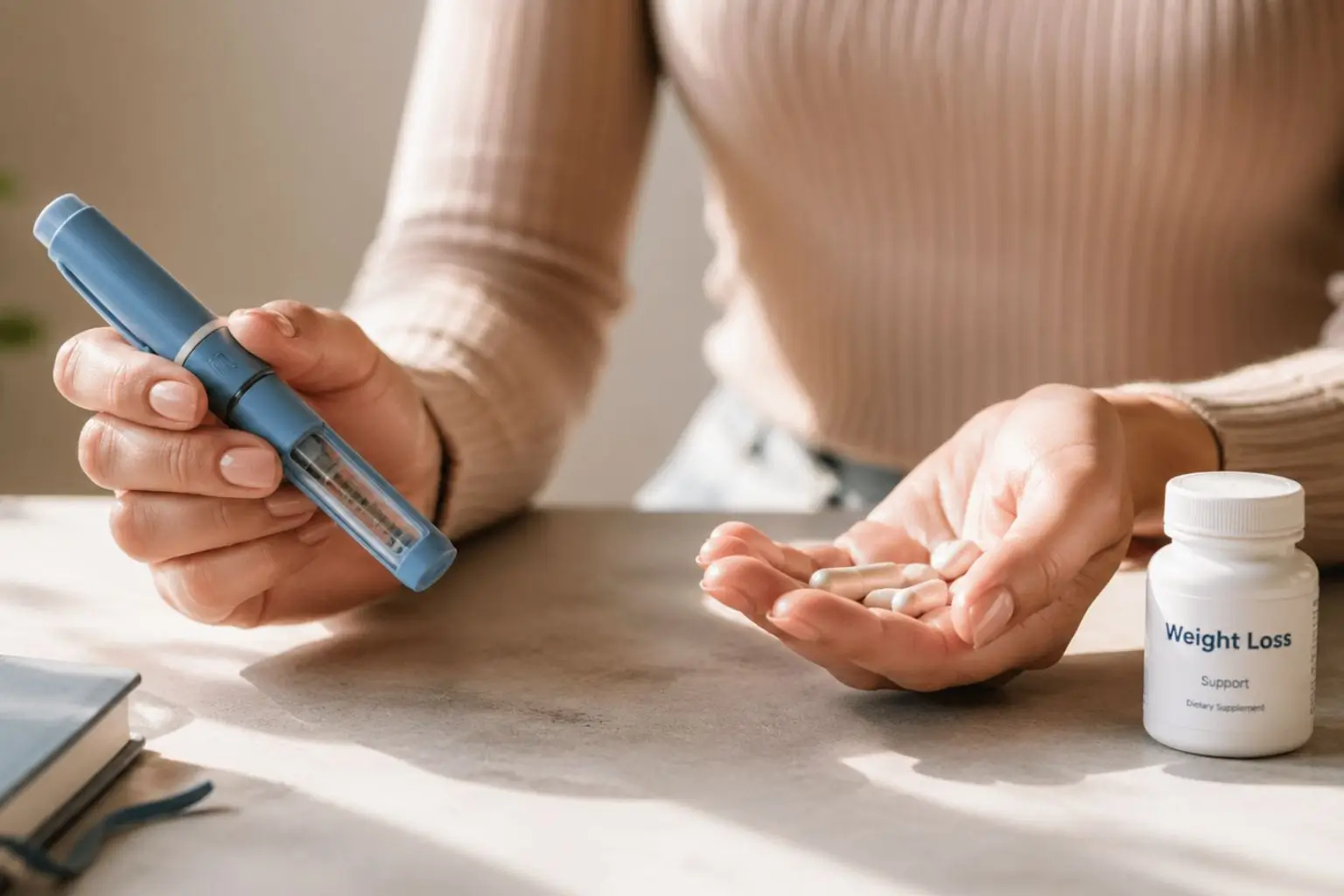
Table of Contents
- Why This Decision Is Not as Simple as It Looks
- How Weight Loss Injections Work
- How Weight Loss Pills Work
- Which Option Is More Effective
- Consistency Often Matters More Than the Medication
- Side Effects and Tolerance
- Cost and Accessibility
- Making the Right Choice for Your Situation
- Why Medical Guidance Still Matters
- Final Thoughts
- Frequently Asked Questions
If you are considering medical support for weight loss, you have likely come across two main options. One involves injections taken weekly, while the other comes in the form of daily pills. Both are widely used, and both can be effective. The challenge is understanding which one actually fits your situation.
This is not just a question of convenience. The difference between injections and pills goes deeper, affecting how your body responds, how consistent you can be, and what kind of results you can realistically expect.
Why This Decision Is Not as Simple as It Looks
At first glance, it might seem like injections are the stronger option and pills are the easier one. While there is some truth to that, it does not capture the full picture.
Weight loss medications work through different biological pathways. Some influence appetite, while others affect how your body absorbs or processes food. The form of the medication often reflects how it works internally, which is why the choice depends more on your needs than on general assumptions.
How Weight Loss Injections Work
Weight loss injections are designed to regulate appetite by working with hormones that control hunger and fullness. These treatments help you feel satisfied with smaller portions and reduce the urge to snack between meals.
Over time, this leads to a natural reduction in calorie intake without the constant effort of restricting food. For many people, this makes weight loss feel more manageable.
Another advantage is the dosing schedule. Most injections are taken once a week, which reduces the need to remember daily medication and helps maintain consistency.
How Weight Loss Pills Work
Weight loss pills take a different approach, and not all of them work in the same way.
Some reduce fat absorption during digestion, while others act on the brain to decrease appetite. Because of this variation, the experience of using pills can differ from one person to another.
Unlike injections, pills are taken daily. For people who are already used to a routine, this can feel straightforward. However, it also means that missing doses can affect overall effectiveness.
Which Option Is More Effective
In general, injection-based treatments tend to produce stronger average results, particularly for people who struggle with persistent hunger or have not seen success with other methods.
However, effectiveness is not just about the medication itself. It depends on how consistently it is used and how well it fits into your lifestyle.
Some people achieve steady progress with pills, especially when they maintain a structured routine. Others find that injections provide better appetite control, which makes it easier to stay on track.
Consistency Often Matters More Than the Medication
One of the biggest factors in long-term success is consistency.
A weekly injection can feel unfamiliar at first, but many people find it easier to manage over time. It becomes part of a routine without requiring daily attention.
Pills require a more active habit. Missing doses occasionally may not seem significant, but over time it can reduce the overall impact of the treatment.
Choosing the option you can follow consistently often leads to better results than choosing the one that seems more effective in theory.
Side Effects and Tolerance
Side effects are part of any medical treatment, and understanding them helps set realistic expectations.
With injections, digestive symptoms such as nausea are common in the early stages. These usually improve as the body adjusts.
Pills can produce different effects depending on how they work. Some may cause digestive changes, while others may influence sleep or energy levels.
What matters most is how your body responds over time and whether the treatment remains manageable.
Cost and Accessibility
Cost plays a practical role in decision-making.
Injection-based treatments are often more expensive and may require ongoing prescriptions and monitoring. Pills are generally more accessible and may cost less, depending on the type and availability.
However, choosing based on cost alone can be misleading. A treatment that delivers consistent results often provides better value in the long run.
Making the Right Choice for Your Situation
Instead of asking which option is better, it is more useful to ask which one fits your needs.
- If appetite control is a major challenge, injections may provide stronger support
- If you prefer a simpler and more familiar approach, pills may be a better starting point
- If consistency is difficult, a weekly option may be easier to maintain
Ultimately, the decision should be guided by your health profile, goals, and how your body responds to treatment.
Why Medical Guidance Still Matters
Weight loss medication is not just about choosing a product. It is about using it correctly and adjusting it over time.
A structured approach, similar to how treatments are managed in other medical conditions, leads to better outcomes. If you want a deeper understanding of how safe medication selection works, this weight loss medication buying guide explains the importance of proper evaluation and supervision.
Professional guidance ensures that the treatment remains safe, effective, and aligned with your progress.
Final Thoughts
Weight loss injections and pills are both effective options, but they serve different purposes. The right choice depends on how each option fits your body, your routine, and your long-term goals.
When the decision is made thoughtfully and supported by proper guidance, it becomes much easier to stay consistent and achieve meaningful results.
Frequently Asked Questions
1. Are weight loss injections more effective than pills?
In many cases, injections provide stronger appetite control and higher average weight loss. However, effectiveness depends on consistency and individual response.
2. Do weight loss pills work without lifestyle changes?
Pills can support weight loss, but results are usually better when combined with dietary changes and physical activity.
3. Which option has fewer side effects?
This varies by medication and individual tolerance. Injections often cause temporary digestive symptoms, while pills may have a broader range of effects depending on their mechanism.
4. Is it easier to maintain weight loss with injections?
Many people find injections easier to maintain due to better appetite control, but long-term success still depends on habits and consistency.
5. Can I switch between pills and injections?
Yes, switching is possible under medical supervision. A doctor can help determine when and how to transition safely based on your progress.